LUMIARE FOR ENTERPRISES
Keep projects, requirements and decisions connected
Managing complex projects means bringing together people, information and requirements from across your organisation. Lumiare helps you see what's missing, identify conflicts and keep decisions traceable – from the first project request to the final audit report.
Explore how Lumiare helps your team:

Built for
Designed for regulated industries including banking, insurance, asset management, payments, energy, utilities, telecommunications, healthcare and pharma.
PROJECT INTAKE AND PORTFOLIO GOVERNANCE
Start every project with the information you need to make a decision.

The Challenge
A project request arrives, but the information is rarely complete. The business case is in one document, architecture questions in another, and important answers sit with people across finance, IT, security and the business.
Your PMO ends up chasing information and trying to understand which projects are actually ready for approval.
How Lumiare helps
Lumiare brings each project request into one structured workspace. It checks what's missing, prepares questions for the people who can provide the answers and tracks progress as information comes in.
Before approval, you can see what has been reviewed, what still needs attention and whether any requirements conflict with your policies.
How it works
01
Submit a request
Start with a project template or create a request with the assistant.
02
Identify what's missing
Lumiare checks the request and prepares questions for the relevant people.
03
Review and approve
Information is checked against your requirements and the request moves through approval.
04
Monitor your portfolio
See project health, outstanding questions and approval status in one dashboard.
What your team Gets
More complete project requests
Clearer requests for information
Project charters and scope descriptions
RFI, RFQ and RFP documentation
Vendor comparisons
Portfolio-wide visibility
Who Benefits
Designed for Heads of PMO, Transformation and IT Portfolio. Used by PMO leads and project managers, with input from business owners, architects, security and procurement teams.
A PRACTICAL EXAMPLE
Instead of chasing twelve project owners for updates, your PMO opens Lumiare and sees what's complete, what's missing and which requests need attention. Questions have already been sent to the people responsible. Any outstanding policy conflicts are visible, with an owner assigned.
The committee can review the full portfolio and open individual projects when it needs more detail.

Common questions
How does Lumiare know what information a project request needs?
A project template defines what a request of that type must contain. Lumiare scores the request against it and lists each gap.
Can people outside the PMO provide information and answer questions?
Does Lumiare replace our existing portfolio management tool?
POLICY AND REGULATION CHECKS
Know when a project conflicts with your requirements – before it moves forward.

The Challenge
A new cloud service, vendor or AI initiative can involve several requirements at once: DORA, NIS2, GDPR, information security policies, cloud standards and architecture guidelines.
Different teams own different requirements, documents keep changing and reviewing everything consistently becomes difficult.
How Lumiare helps
Lumiare brings your regulations and internal policies into one Knowledge Hub and checks project information against the requirements that apply.
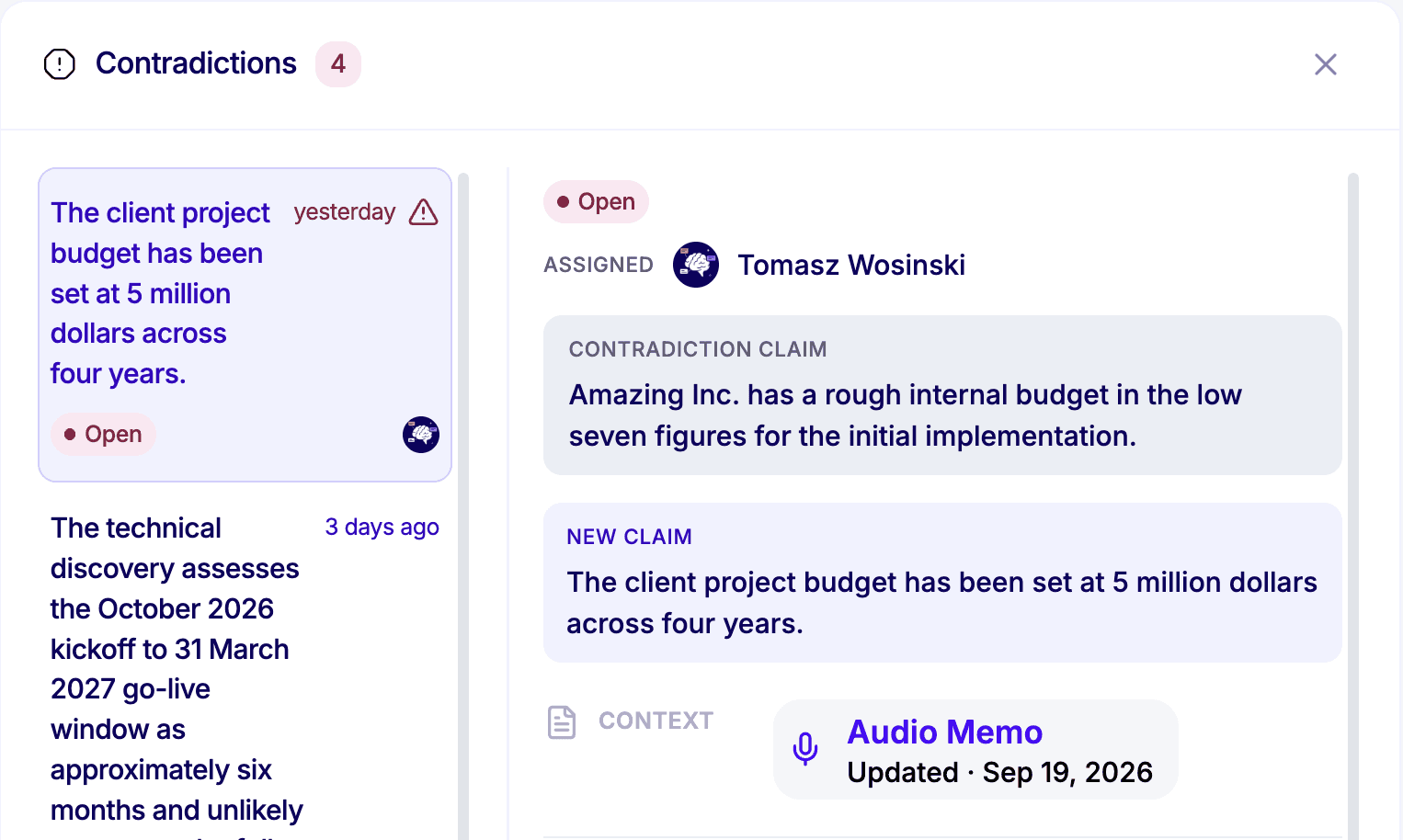
When it finds missing information, contradictions or conflicts, it shows the relevant statements side by side, includes their sources and suggests a resolution.
The responsible people review the findings and record their decisions. New information is checked as it arrives.
How it works
01
Bring your requirements together
Start with Lumiare's framework library and add your own policies.
02
Check your project
Compare project information with the relevant requirements.
03
Review the findings
See conflicts, gaps and contradictions, with their sources and severity.
04
Resolve and record
The responsible people review findings and record their decisions before approval.
What your team Gets
Findings organised by severity
Clear ownership of outstanding issues
Conflicts and contradictions with supporting sources
Recorded decisions and resolutions
Project summaries and scope descriptions
A history of what was reviewed and resolved
Who Benefits
Designed for CIOs, Heads of IT Governance and CISOs. Used by GRC, ICT risk and enterprise architecture teams, alongside project owners and security reviewers.
A PRACTICAL EXAMPLE
But an internal standard in your Knowledge Hub specifies that the service must operate in the United States.
Lumiare highlights the contradiction, shows both statements and their sources, and proposes possible ways to resolve it.
The project owner and security reviewer can discuss the issue, agree on the next step and record their decision before the project proceeds.
Common questions
Which regulations and frameworks are included?
Lumiare ships with a starter set that includes DORA, NIS2, GDPR, the EU AI Act and NIST CSF 2.0. You add the frameworks, supervisory guidance and internal policies you work under, and every project is checked against all of them.
Can we add our own policies and standards?
Does Lumiare determine whether a project is compliant?
AUDIT AND CONTROL EVIDENCE
Spend less time chasing evidence. Know what's ready for review.

The Challenge
An audit involves information from many people and departments. Policies, runbooks, asset registers and interview notes all need to be collected, checked and linked to the relevant controls.
Auditors need to know where evidence came from, whether it is complete and who has reviewed it. Keeping everything consistent across an audit cycle can become a project in itself.
How Lumiare helps
Lumiare organises your audit around the framework and its individual controls. Each control has defined evidence requirements and a responsible owner.
As documents arrive, Lumiare identifies which controls they support, highlights missing information and checks for contradictions between supporting documents.
Control owners review and confirm the evidence. Your audit report can then be prepared using information that has been reviewed and verified.
How it works
01
Set up your audit
Start with a framework template containing the controls and their evidence requirements.
02
Collect the evidence
Bring documents and information from control owners into the audit project.
03
Review and verify
Identify gaps and contradictions, and ask owners to review and confirm the evidence.
04
Prepare your report
Generate audit documentation from the verified information and retain the history.
What your team Gets
A structured control register
Evidence linked to individual controls
Visibility of missing or incomplete evidence
Recorded owner confirmations
Asset registers and supporting documentation
Audit reports based on reviewed information
A traceable history across audit cycles
Who Benefits
Designed for Heads of Compliance and Internal Audit. Used by audit managers, auditors and control owners across IT and the wider business.
A PRACTICAL EXAMPLE
You create a new audit project from your existing framework. Lumiare helps propose owners based on available roles and information, and each owner can see what evidence they need to provide.
As documents arrive, the team can see which controls are complete and which still need attention. When the next audit cycle begins, the previous cycle remains available with its own decisions and history.

Common questions
Does Lumiare automatically collect evidence from our existing systems?
Evidence enters through upload: policies, asset exports, recordings, notes and spreadsheets. Each file reports how many controls it filled. Lumiare works with Jira, Google Workspace and Microsoft Teams, and ServiceNow is next.
Can we reuse the same audit framework for the next cycle?
We already use a GRC tool. Where does Lumiare fit?
