Lumiare captures what a project knows, structures it, has the people who own it verify it, and writes the documents from the result.
OVERVIEW
What Lumiare is
Lumiare is a Contextual Intelligence Platform, built by maiven s.r.o., that turns meetings, documents, transcripts, spreadsheets and notes into a verified record of a project: what was agreed, why, by whom, and where it came from.
Systems of record hold the what, who and when. Lumiare holds the why. A CRM knows who the client is and what the engagement is worth. A delivery tracker knows which tasks are open. Neither holds the reasoning that dozens of people produced over months of meetings, documents and emails: what the software should do, which constraints apply, what was decided and what was assumed. Lumiare is where that lives. Every item has an owner, a score, a contradiction check and a trail back to its source.
Five layers, one platform
Contextual Intelligence Engine
Reads every source, extracts entities and claims, scores completeness, detects contradictions, and grounds every answer and every generated section in its sources.
Capture and Structure
Files, recordings, transcripts, voice memos and notes in; one item per thing the project must know, plus sheets and boards, out.
Knowledge and Memory
An organization knowledge base, scoped into each project as allowed, and a typed knowledge graph of what has been extracted.
Collaborate and Verify
Owners, reviewers, comments, verify and reject, version history, tasks, notifications and live co-editing.
Act and Generate
Memos, business documents written from verified context, and an assistant that answers from the project and acts inside it.
Cross-cutting,
Trust,
Integration,
Deployment
Encryption, source handling, access control, deletion, and private cloud or self-hosted models on request.
The modules in one view
Companies
One entry per client or internal entity; every project belongs to one, so context never mixes between clients
Projects
The working object: source files, core information, sheets, boards and output documents, with memos, contradictions, tasks and activity beside them
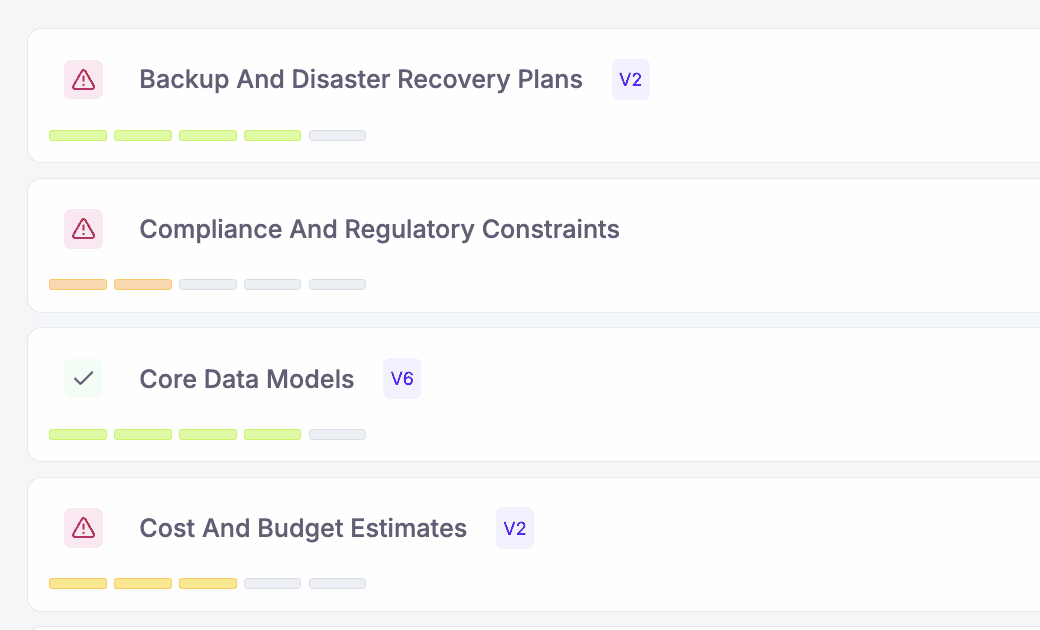
One item per thing the project must know, each with a description of what good looks like, the gathered content, an owner, reviewers, tags, a completeness score, a verification state and a version history
Sheets
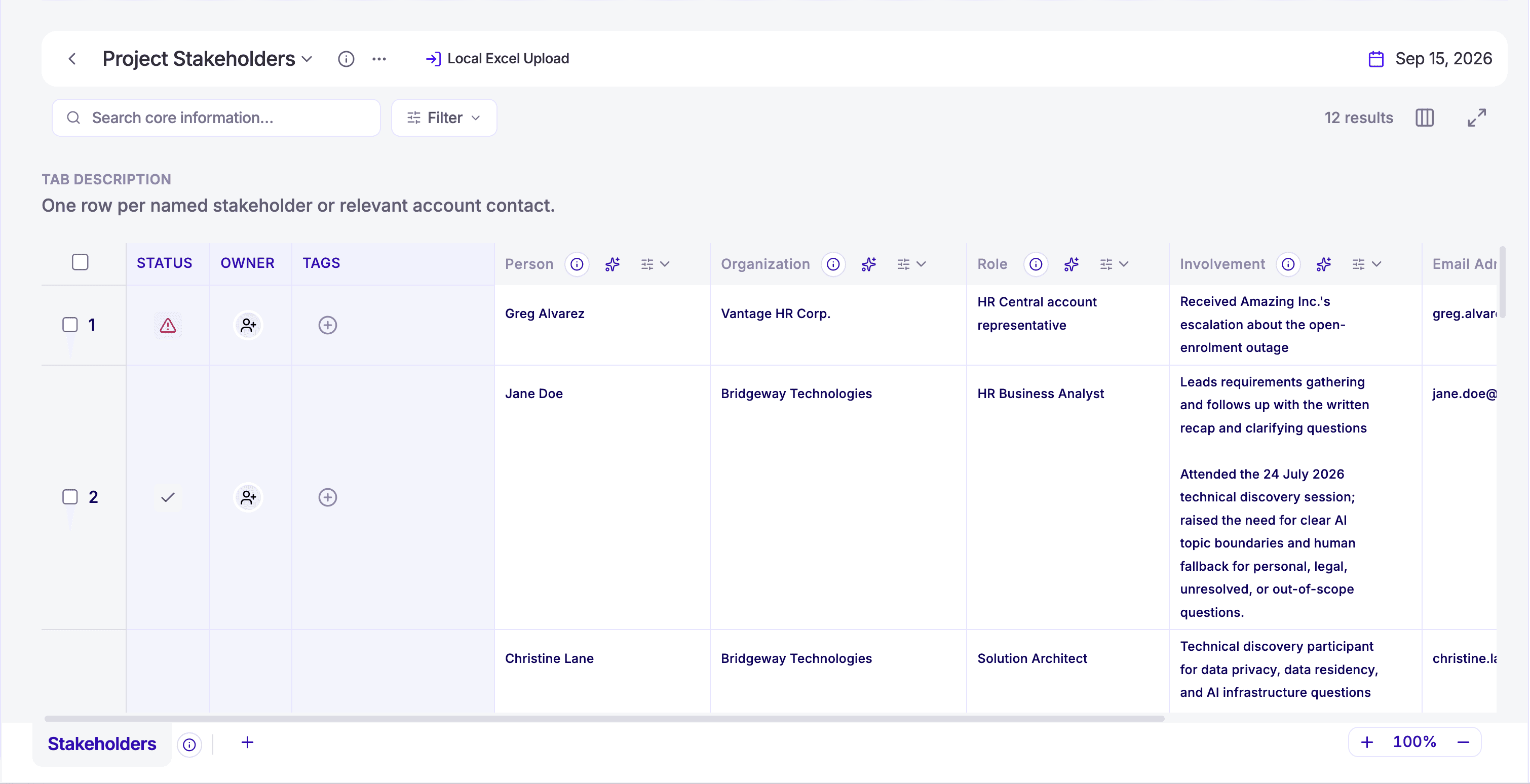
Requirement registers, backlogs, estimation grids and evaluation matrices as rows with owner, tags, status and AI-fillable columns
Boards
A canvas for architecture diagrams, process flows and workshop notes, kept next to the items they inform
Charters, scope descriptions, statements of work, proposals, specifications, RFPs and audit reports, generated from verified context and edited together
Contradictions
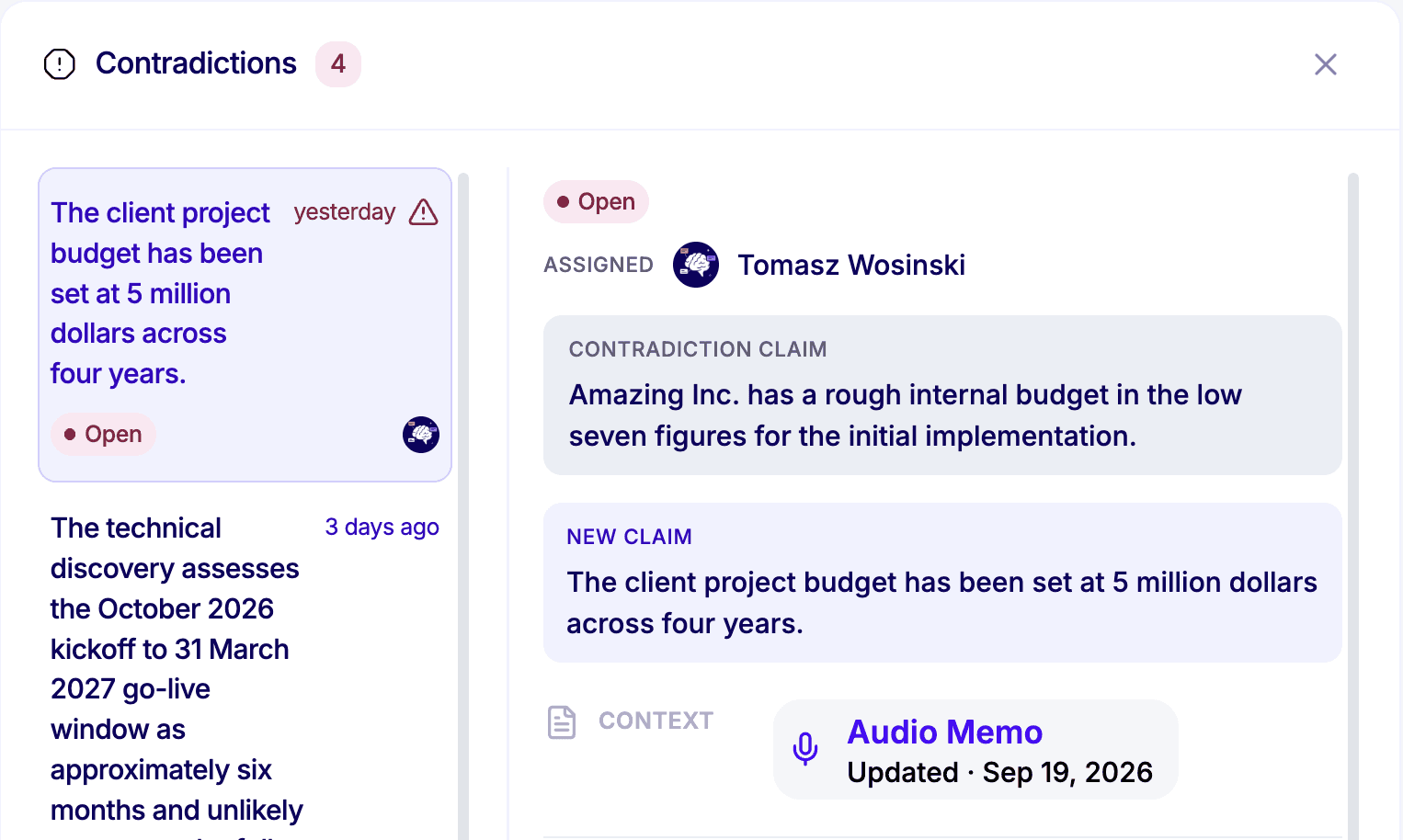
Every disagreement between sources, raised on upload, resolved by the team
Knowledge Hub
The organization's reusable material, made available to projects one scope at a time
Agents that read every source, extract what matters, and act on it, assigning owners, applying tags, flagging gaps, so the team starts from work already done.
Templates
Project templates define what a project must know; document templates define what a deliverable must say
Everything below is in the product today. Grouped by the four conditions each capability serves, with the full list behind each one.
Complete
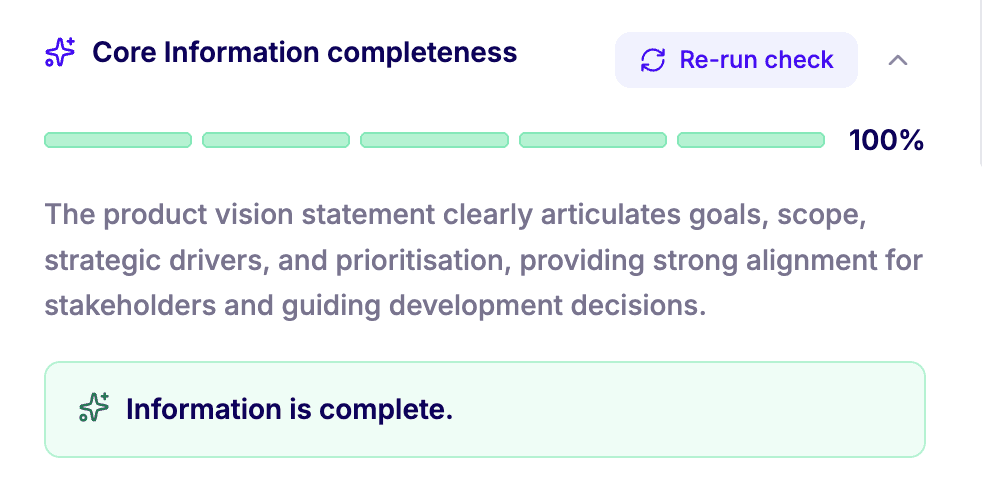
A project is only as good as what it knows. These capabilities measure what is missing and put it in front of the person who can supply it.





Consistent
Two sources that disagree are cheap to settle in week two and expensive in month four. These capabilities find the disagreement on the day it arrives.


Owned
An item without a name on it is nobody's. These capabilities put a person on every item and give them the tools to confirm it.


Traceable
The question at the end of every project and every audit is where a fact came from. These capabilities keep the answer.






Documents Lumiare writes
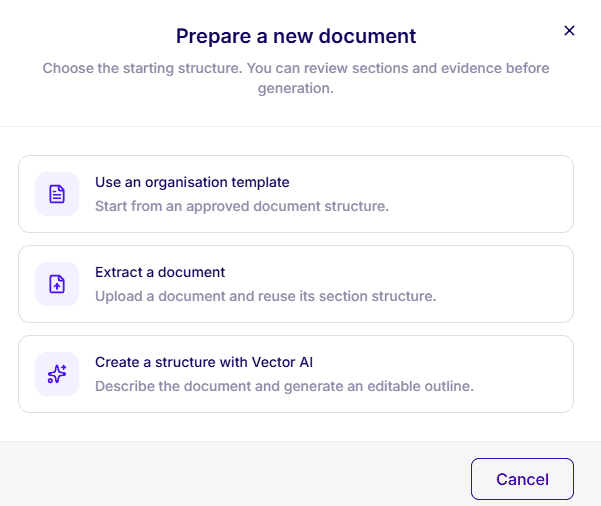
Each document starts from your own template or from the structure of a document you already use, with every section linked to verified project context, then opens for the team to edit together and export.
Lumiare also builds the registers behind them: requirements, vendor comparison, asset and control registers, as sheets with an owner on every row.
Beside the documents, Lumiare builds the registers: requirements, vendor comparison, asset and control registers as verified sheets.
Project charter
Scope description
Statement of work
Proposal
Requirements specification
RFI, RFQ and RFP
Audit report
Project summary
Trust and security
How Lumiare handles your data
Written for the person whose job is to say no.
What
How
Hosting
Lumiare runs on Google Cloud
Encryption
All data is encrypted in transit and at rest
Source files
Processed into structured items and removed, unless you choose at upload to retain the file
Deletion
You can delete any item, file, project or company at any time; nothing is shared outside your organization
Access
Permissions by role at organization, project and item level; editor and read-only access; private projects
Training
Customer content is never used to train language models
Knowledge scope
Each project uses only the organization material it has been explicitly given
Audit trail
Every item records who changed it, when, from which source, and who verified it
Frequently asked questions
Who owns the data, where is it stored, and is it used for training?
What happens to my source files after upload?
Is Lumiare a document management system?
Is Lumiare a project management tool? Does it replace Jira?
